
Edward Hsiao, MD, PhD, Receives NIH Award to Model How Hormones Shape Bone Disease
The project is part of NIH’s new $21 million Computational Modeling of Hormone Homeostasis Initiative
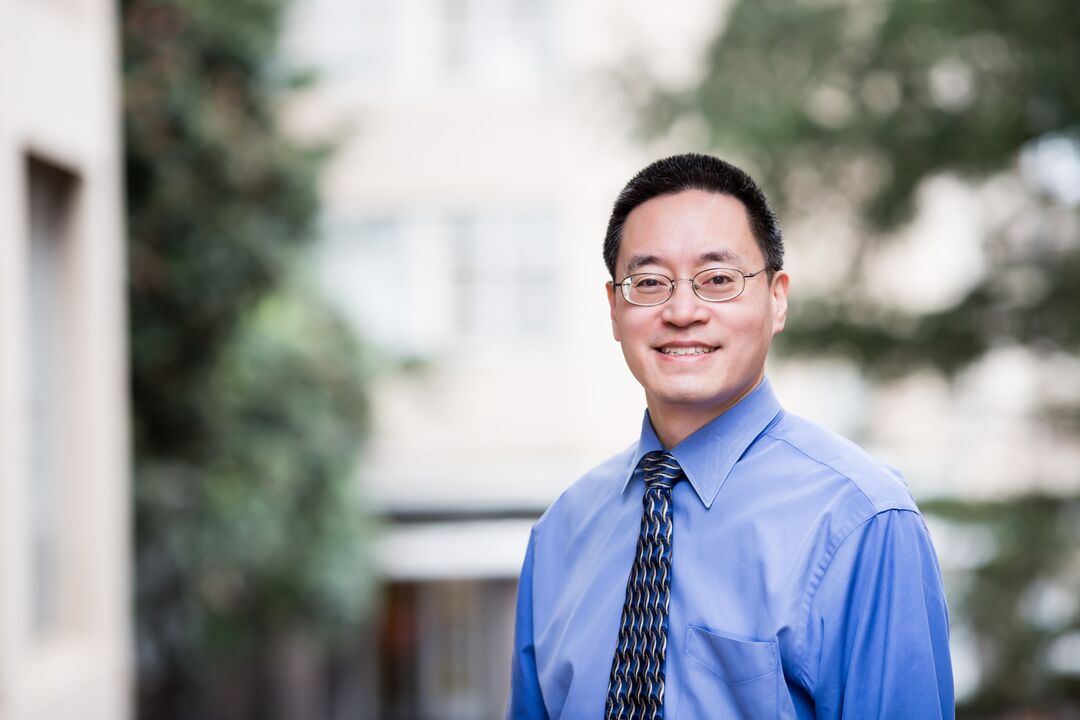
Edward Hsiao, MD, PhD, professor and associate chief for research in the UCSF Division of Endocrinology and Metabolism, has received a new NIH award to develop computational models that predict how hormones shape bone disease.
Musculoskeletal conditions like osteoporosis, fractures, and rare skeletal diseases are the second most common cause of illness and death in the US and a leading cause of disability worldwide. Hormones shape bone health throughout life, yet common research models, like mice, can’t fully capture how human hormones function.
Dr. Hsiao will lead “Computational Modeling of Human Hormone Homeostasis in Bone to Predict Sex-Specific Disease and Therapeutic Responses.” The project will develop HERO (Hormonal and Endocrine Regulation of Osteogenesis), an AI-enabled platform that integrates clinical, genetic, multi-omic, microbiome, and biomechanical data to model how hormones shape bone health and disease.
The team will first test HERO on conditions of bone overgrowth, which currently have no effective therapies, then use what they learn to build more robust models for common diseases like osteoporosis. The goal is to help clinicians predict how bone disease will progress, which treatments will work best, and which may cause harm.
“Our team is excited by the potential to change how we diagnose and treat skeletal diseases. Our goal is to leverage existing databases and new tools to predict how bone disease may progress, identify which treatments may work for different people, and better understand potential side effects. Ultimately, we hope HERO will provide a new, human-centered way to study bone health and help move us toward more personalized treatments for skeletal diseases.”
Edward Hsiao, MD, PhD
Professor and Associate Chief for Research, UCSF Division of Endocrinology and Metabolism
Director, UCSF Endocrine T32 Program
Director, UCSF Core Center for Musculoskeletal Biology and Medicine
Associate Program Director, UCSF Endocrinology Fellowship (Clinical) Program
Faculty Practice in the UCSF Metabolic Bone Clinic
The award is part of NIH’s new $21 million Computational Modeling of Hormone Homeostasis Initiative, which supports computational approaches, from machine learning to digital twins, that simulate how hormones regulate the body. Read more about the initiative.
This is an innovative interdisciplinary collaboration between Drs. Hsiao, Marina Sirota, Dan Evans, Christopher Hernandez, Grace Gu, Hanqin Li, Dirk Hockemeyer, Tomiko Oskotsky, and Anne Schafer, spanning the Endocrinology, Institute for Human Genetics, Orthopedics, the Core Center for Musculoskeletal Biology and Medicine (CCMBM), and Bakar Computational Health Sciences Institute at UCSF, as well as the Mechanical Engineering, Innovative Genomics Institute, and Molecular and Cell Biology Programs at Berkeley.